(10 minutes read)
Expose yourself to the best things that humans have done, and then try to bring those things into what you’re doing (Steve Jobs)
-Abstract-
Richard Sagala’s wine story began in the 70’s with an analogy game involving wine and the sound of musical instruments, the meeting of a classical musician with a passion for gastronomy, to Paris in 1984-85, to Lyon 1993 -1996 discovering French wine regions and chefs table while receiving his first official wine course, to discovering Protocol at the Canadian Consulate, to Butler studies in the Netherlands and the UK in 2001, to becoming a wine expert, to starting in 2012 the first private WSET school in Québec, to completing a Wine MBA in Bordeaux and getting involved in wine business research presenting in academic circles around the world, to creating the International Montreal Butler Academy in 2016 with a proprietary wine cellar management program, to sourcing cellar worthy original wines. In November 2018, in a mysterious twist of fate, Richard Sagala returned to the exact same spot where he met the classical musician mentioned (at the beginning of this text) that got the ball rolling for him some forty-five years ago. All came full circle when Richard got appointed Sommelier to Orford Music arts centre, saddled with the task of creating and organizing wine events to generate money for the bursary fund. In 2022 Richard Sagala created the first Canadian delegation of the Knights of Alba becoming Maestro of the Montreal Chapter of the Ordine dei Cavalieri del Tartufo e dei vini di Alba, a cultural organisation with the mission of promoting knowledge about Italian Piemonte gastronomic heritage and Langhe wines (Barolo-Barbaresco-Roero). Winter of 2026 Richard was back in Paris to teach at the KEDGE Business School, his eigth year participation in the Msc. in the Arts and Creative Management program.
From Music that taste good, to wine, food and back to the Music that taste good… where it all began.
I have always been fascinated by the taste of wine. In my youth in Canada, when I was a student at the Conservatory of Music in Québec City, I had a little game to help me in trying to figure out what was a good quality sound. The game consisted of comparing the taste of wine with the sound of musical instruments.
What was a simple game at first became serious when I met a classical guitarist during a Summer music academy at the Orford Arts Centre in Canada in the seventies. The quality of tone that Alexandre Lagoya could get from a classical guitar, his guitar and my (inexpensive) guitar was unbelievable: Power, warmth, depth of tone, sustain, clarity, balance, expression and intensity.
To this day, I compare it with the experience one gets when drinking a nice Bordeaux on occasion and then, one day, is offered a glass of Latour to experience…
In a word: Wow!
This fantasy of mingling wine and music would have proved not so far fetched in the end because Alexandre Lagoya, as I grew to know him, spent 80% of the time talking about cooking and wine and 20% about music.
Lagoya used to say that, when you play music it is like when you serve a dish. He suggested that the dish should be good enough to make one want to keep eating it. Better prepare a recipe that you master than challenge yourself with a complex one that you barely understand. This was his mantra (for us students).
Execution, execution, quality of execution!
This gastronomic slant is something that anybody in contact with him couldn’t avoid to notice but, the intensity of it, was quite a revelation when he invited me to spend a weekend with him in New York in 1983. Aside from preparing for the concert he was about to give in Manhattan, it was all food talk or eating; we even went to visit the kitchen accessories department at Bloomingdales…
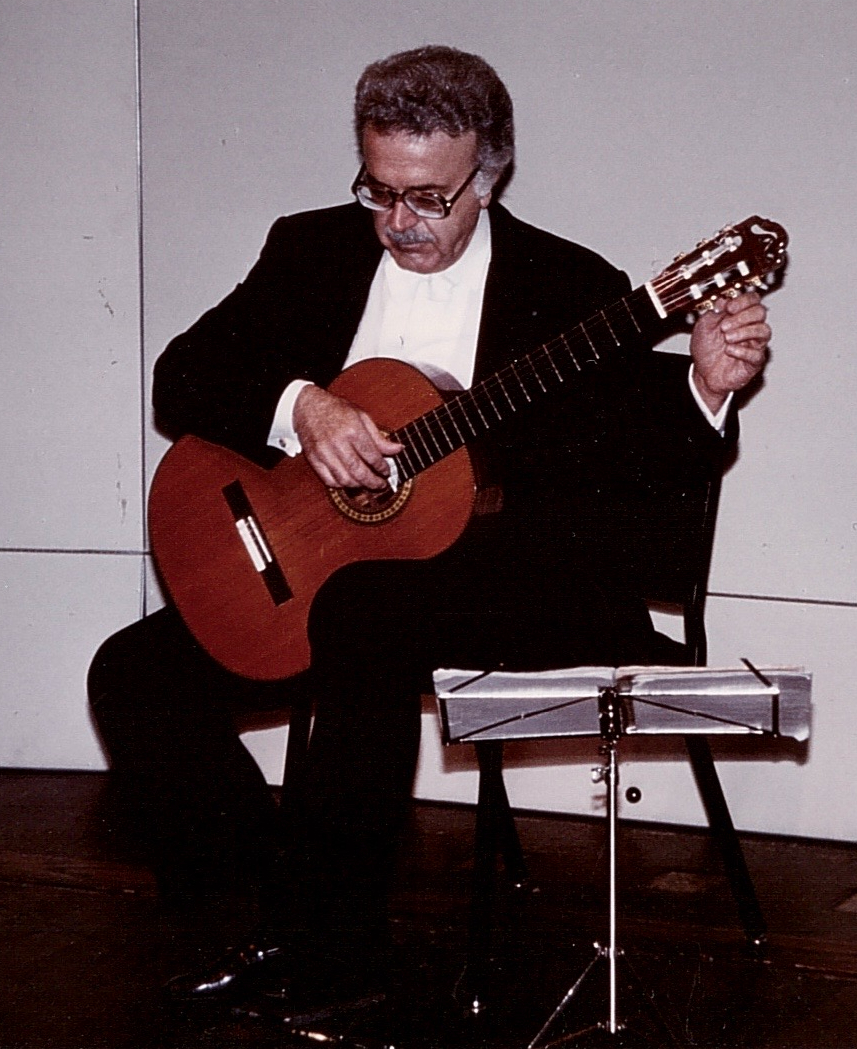
Later on that year, Alexandre Lagoya came to Montreal to play and, although we had invited him, here he was, at our place, cooking a meal for us (cooking for him was relaxing and he traveled with spices in his suitcase).
In 1984 and 1985, when I was studying in France, Lagoya invited us many times to his home near Paris. He was living near a forest in a place called Soisy-sous-Montmorency, always cooking something and proud to show his wine cellar. Bottles of classic first growths where gracing the walls interspersed with small producers bottles that he would collect when crisscrossing France, giving concerts.
During that period, Lagoya’s wife, Monelle, made me aware of the Gault et Millau gastronomic guides. I found the one on Paris and started exploring the various places where to find the best cheeses, wines, good bread et al. Then I found the wine guides. Reading them carefully and tasting the recommended (not too expensive) wines was the beginning of my “wine studies”.
1994 (some thirty + years ago) has been the year of my first official wine classes when I attended a weekend of workshops in the south of France organized by l’Université du Vin (Suze-la-Rousse, Vaucluse). For three years Lyon was my anchor point from which I would explore the Rhône valley, the Beaujolais and the Burgundy terroirs, taking stock of all the gastronomy one can find in this lovely city and at the periphery like Bocuse (Collonge au Mont d’Or) and even offsite like Pierre Gagnaire who was still operating his restaurant in St-Étienne. Besides Lyon, I went to visit landmarks the likes of Pic (Valence) and la Pyramide (Vienne) in the south, to les Frères Troisgros (in Roanne) in the west and Bernard Loiseau (Saulieu) in the north, Marc Veyrat (Annecy) in the east, etc, plus escapades in Alsace (at the table of Émile Jung chef of le Crocodile), Belgium (Buerheisel, chef Westerman), Carcassonne (Hotel de la Cité), Paris (Lucas-Carton) where chef Alain Senderens had created a reputation for himself with refined wine and food paired menus. To add to these experiences dating form 1993 to 1996, I remember previous ones, in the year 1985, with a meal at Guy Savoy (then rue Duret) in Paris and a great experience at Michel Guérard (Les Prés d’Eugénie).
All these great places had first class sommeliers who were always willing to share their knowledge and, again, Lyon was not a bad city for a gourmand. There was a « caviste », a wine shop, Morel on Maréchal de Saxe street (where we lived) owned by a Mr. Morel who was very knowledgeable and eager to let one discover his selected producers. I would buy there the wines we used for the functions and the social agenda of the Canadian Consulate (my wife was the Canadian Consul from 1993 to 1996). Facing the Consulate on rue de Bonnel was Les Halles de Lyon, a food emporium of all the best culinary products one could wish for and an (inspiring) source of supply for chefs. Plus, being part of the diplomatic corps got us a flurry of official invitations culminating with a special dinner in the Lyon archaeology museum at the end of June 1996 in honour of the visiting head of states for the G7 summit (Lyon being the G7 host city that year). I took this picture at the closing ceremony.
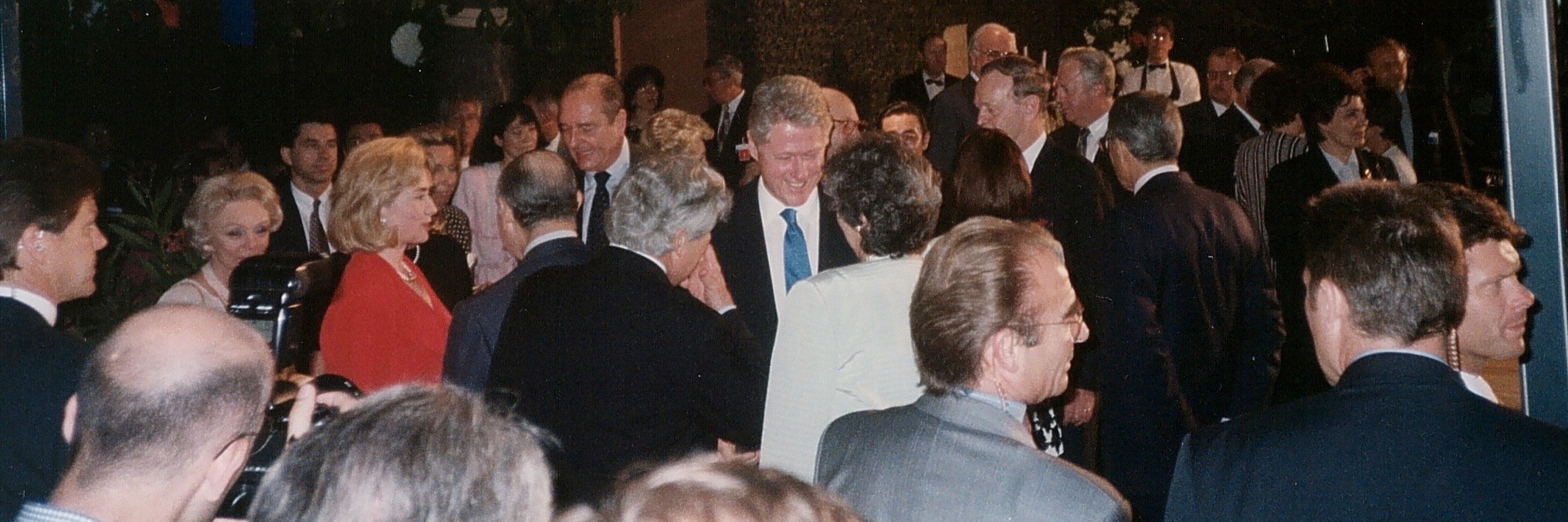
(Fourvière, Lyon 1996, Richard Sagala private album)
A quizz: Could you recognise a few head of states and leaders of International organisations? there are ten of them in there (*see the names at the end of this article).
A few years later, in 2001, during my butler training in the Netherlands, I received more wine instruction plus a wine and food pairing instruction. (I still remember the rabbit cooked in Chinon wine) from an inspiring Dutch sommelier in the city of Gouda. This teacher showed us how to properly saber a bottle of champagne, something a butler must be able to do in the appropriate manner apparently…
Seriously bitten by the wine bug and with a nascent butler-cum-wine project (that I will explain later), I started taking wine courses at the state run hospitality school in Montreal as soon as I returned in 2002 and, from 2002 to 2018, it never stopped. This journey led me to gain ten wine certifications and diplomas plus, at the end of 2011, a Wine MBA from the Bordeaux School of Management, BEM.
Talking about Bordeaux, allow me to describe what happened from 2009 to 2012 over there. First, during the Fall of 2009 I became a certified instructor for Bordeaux wines at the CIVB school then I enrolled in the Wine MBA program offered by the Bordeaux School of Management (BEM). This special Wine MBA, the only MBA program of that sort (since disappeared) led us around the world, from the UK to Australia, to the USA, with the purpose of studying wine related topics in places that have achieved excellence and had a speciality, an area of expertise (like wine distribution in the UK, marketing in Australia, etc.)
Following the MBA, in 2012, the UK based Wine and Spirit Education Trust (WSET) granted me a license to open the first privately run WSET school in Québec. We teach in English and French, and our school bears a French name, École In Vino Veritas (EIVV). EIVV has been successful since the beginning. We are the first and only privately owned bilingual WSET active in research operating in Canada.
Being equally interested by wine commerce, I immersed myself through the years in wine related business research and presented the school academic findings on a dozen occasions here and abroad. Some of it attracted media attention and two of our papers ended up on the website of the American Association of Wine Economists.
One wine project that’s been close to my heart is the Wine Leaders Forum. From 2014 to 2019, I was invited six times to participate in the Wine Leaders Forum with Kedge Bordeaux Business School and UBC, the University of British Columbia. There, I took part in the brand building seminars and organized every year tasting workshops for the BC wine producers on the theme: « Determinants of quality and sense of place ». This is a rather special experience when you think about it, BC wine scene is recent, it developed its momentum in the 1990’s and it feels like a privilege to witness and be modestly associated with the first twenty years of a new wine region and see it grow (Especially one with such a qualitative potential like British Columbia!).
In contrast, the opposite of a « new » wine region would be Italy.
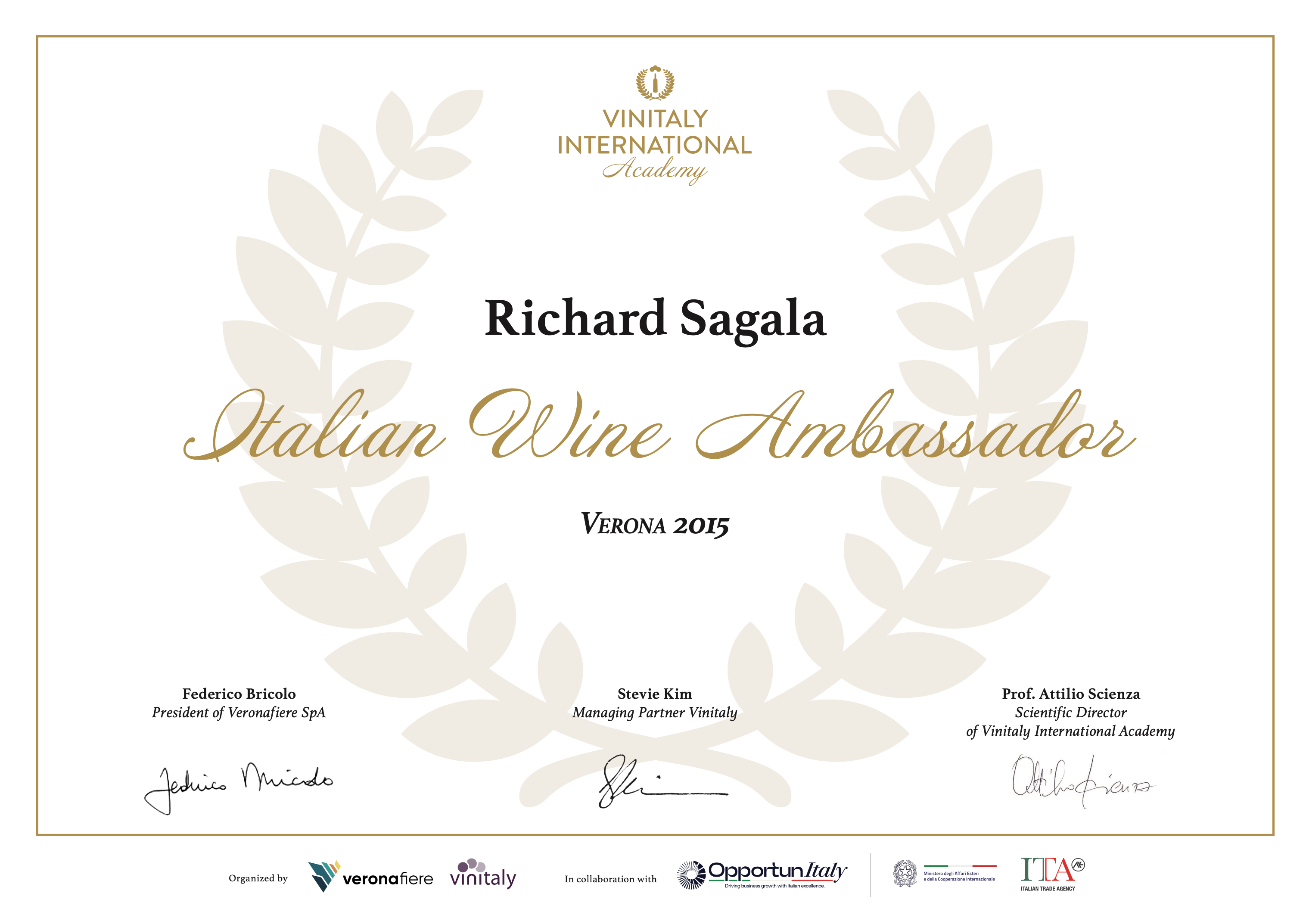
In 2015, I became an Ambassador for Italian wines in the first cohort of the (then) new wine program delivered at the Vinitaly International Academy .
One year later, in 2016, I started the International Montreal Butler Academy (IMBA). The IMBA butler school was designed as a distinct service school, a standard bearer of the highest norms in the trade, its program enriched by a fine wines proprietary cellar management curriculum. This is what I was hinting at earlier when I said that I got an idea in 2001 for a butler-cum-wine project. The school was designed this way because, during my Butler studies in the Netherlands, we were told that butlers command high salaries. In my mind I was thinking: « how one can pretend to gain a high salary without any area of specialization or unique expertise? » Yes, a butler works hard and has managerial responsibilities but, as an area of possible specialization, few are adding as much value as wine expertise in that context .
The dining room is the focal point of a butler and employers normally have access to a respectable wine cellar in the service of their social agenda. The cellar falls naturally under the responsibility of the butler. It is not for the chef or any other person in the household to manage the cellar and it has traditionally always been the case. So much so that the name for the profession « butler » is a transformation and adaptation into the English language of the French word « bouteiller » the one who, in days of yore, was in charge of transferring wine from the cask to the bottle (the word « bottle » in French is « bouteille ») .
Plus, wine owns food!
A good butler will work magic with a chef to create harmonious pairing.
It is with that in mind that I formed the project of becoming conversant with wine, especially wines worth cellaring, and use cellar management and food pairing expertise to constitute the DNA on which to build our Butler school. This project has required time and efforts and was fifteen years in its development phase before seeing the light of day in 2016.
-To come full circle-
At the end of November 2018, I got appointed Sommelier for Orford Music, at the very same place where it all began forty-five years ago. I am saddled with the task of creating and managing the Orford Music fine wines cellar and creating and organizing wine events to generate money for the bursary fund.
Right there where a great musician told me once (in 1974, some fifty years ago):
“You have to whet the appetite of your listener; play a few notes and make them taste (sound) good. If you get the attention of the listener they might lend you an ear and will desire for more. Otherwise, they won’t eat it. It’s that simple. Execution, execution, quality of execution! Think of a perfectly executed simple dish cooked to perfection with the best quality ingredients…for sure, a winner!”.
Then Lagoya took my guitar and demonstrated what he meant by “play a few notes and make them taste good”.
-I was awe stricken-
I learned a lot from Maestro Lagoya; if I would have to put it in a sentence it would be the following:
First, Rise! Rise as high as you can get, and then, spread your arms, take the plunge and go as deep as you can.
Alexander Pope said it more eloquently:
| A little learning is a dangerous thing ; |
| Drink deep, or taste not the Pierian spring : |
| There shallow draughts intoxicate the brain, |
| And drinking largely sobers us again. |
This, is the kind of situation Orford Music Academy students are likely to get from the encounter with the great classical musicians they will meet in the idyllic setting and serene environment of the Orford Arts Centre in Québec.
Twenty-five years after Lagoya passed away (1929-1999), I felt privileged to add my modest share and build this cellar to raise the endowment of this noble (seventy-five years old) Canadian institution.
2019-2026
In 2019, I started lecturing for KEDGE Business School Paris in the M.sc. In Arts and Creative Business Management.
In 2020, in the wake of COVID-19, the International Montreal Butler Academy stopped its school activities. École In Vino Veritas + KEDGE has been my main focus since.
Fall of 2022, I became Maestro of the Montreal Chapter of the Ordine del tartufo e dei vini d’Alba creating the Montréal Delegation, their first presence in Canada.
Fall of 2023, I became Commandeur of the Montréal Chapter of the Commanderie de Bordeaux with the goal of building bridges between Bordeaux and Barolo at our Knights of Alba club.
Fall of 2025, with its 45 Knights members, the Montréal delegation of the Ordine del tartufo e dei vini d’Alba presented its12th tasting activities.
More French things!
February 2026 back in Paris teaching management tools to the new cohort of students enrolled in the Paris KEDGE Msc. in Arts and Creative Management program; this being my eigth year of collaboration with the Paris KEDGE Business School.
Of note: June 12 2025, in Montréal, was held the first tasting dinner of l’Ordre du Bon Temps my last gastronomic club creation devoted to revive l’Ordre du Bon Temps the first ever gastronomic club in the New World (created by Samuel de Champlain in…1606!)
Of note: Summer of 2026, our wine school École In Vino Veritas will be in its fifteenth academic year.
Thank you for having been kind enough to read these lines and allow me to toast and drink to your good health!
Richard Sagala
PS:
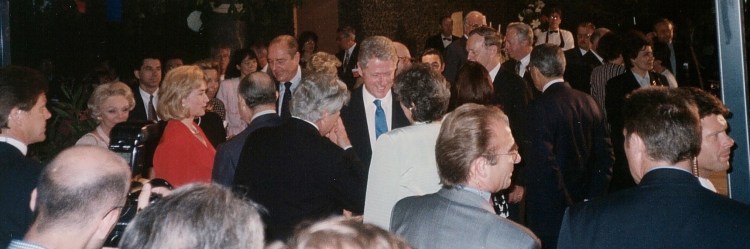
*Here are the names of the officials photographed at the cocktail preceding the fireworks offered by France at the closing of 1996 G8 summit, Fourvière hilltop, Lyon:
The tall gentleman at the back (right of center): 1- Helmut Kohl German Chancellor, (in front of him to the right): 2-Jacques Santer, European Commission President, (in front of him and seen from the back): 3- Boutros Boutros Ghali UN Secretary-General, ( in front of Boutros Boutros Ghali and to his left): 4- Jean Chrétien Canadian Prime Minister, (to his right): 5- Ryutaro Hashimoto Japanese Prime Minister, (to his right): 6- Renato Ruggiero Director-General of the World Trade Organisation, (in front of him): 7-Bill Clinton President of the United States, (looking at him, and seen from the back): 8- James Wolfensohn President of the World Bank, (in front of his left shoulder and seen from the back): 9-Raymond Barre, ex French Prime Minister and 1996 Lyon Mayor, (facing him): 10- Jacques Chirac President of the French Republic, (to his left): 11-Mrs Hillary Clinton First Lady of the United States and behind her to the left: 12- Mrs Raymond Barre.
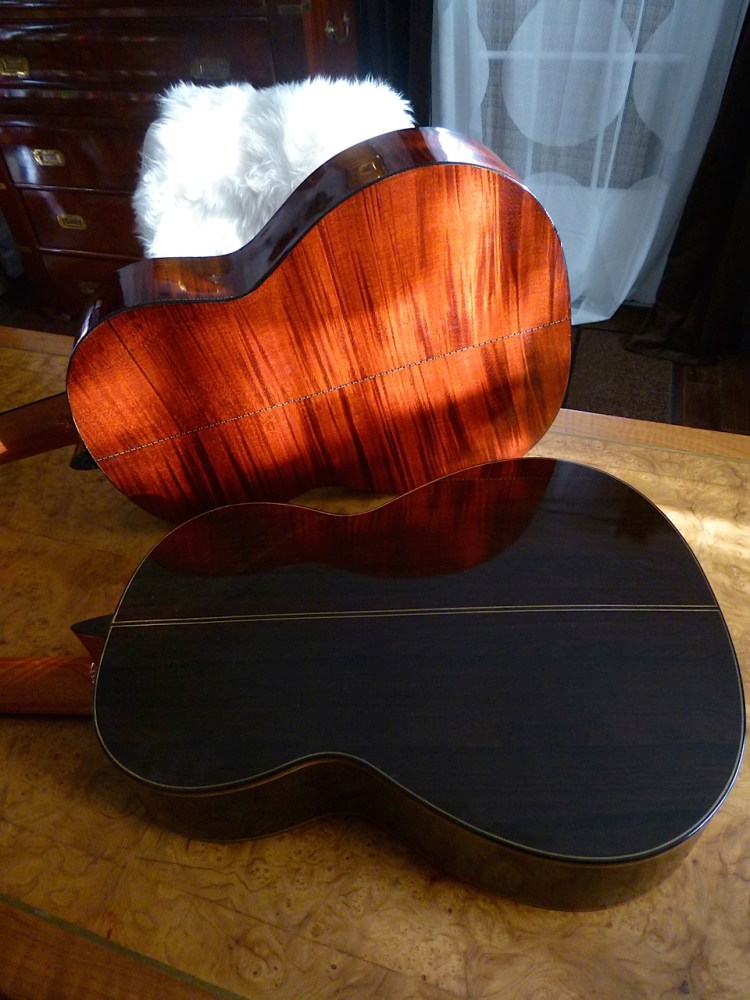
F. Tárrega Capricho Arabe, R. Sagala guitar
-The end-

 WSET Wine Courses start every month all year around! Cours WSET personnalisés débutant à tous les mois